
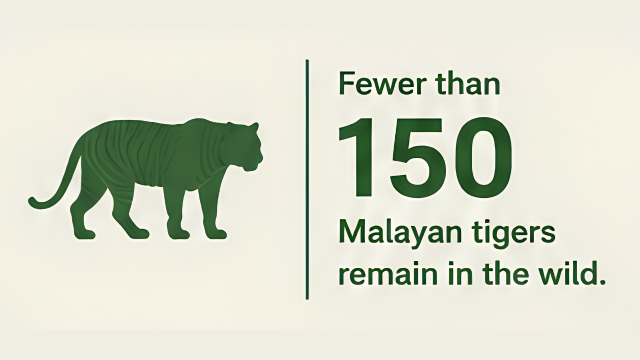
Every year on 29 July, the world marks Global Tiger Day to raise awareness about the urgent need to protect wild tigers and support conservation efforts across their remaining habitats. In Malaysia, the occasion carries even greater significance, as the country's iconic Malayan tiger is now classified as Critically Endangered, with fewer than 150 individuals believed to remain in the wild.
Despite the alarming decline, conservationists say there is still hope, but saving the species will require long-term commitment, collaboration and continued public support.
More Than Protecting Tigers
Advertisement
Poaching remains one of the greatest threats facing the Malayan tiger. However, modern conservation efforts extend far beyond protecting the animals themselves.
WWF-Malaysia and its conservation partners are taking a comprehensive approach that includes anti-poaching patrols, strengthening prey populations, improving habitats and supporting frontline conservation teams. These initiatives aim to rebuild healthy ecosystems where tigers can survive and eventually recover.
According to conservation experts, protecting the tiger also means protecting Malaysia's forests—ecosystems that provide clean water, support biodiversity and help strengthen climate resilience for communities across the country.
Why Tigers Matter to People
While many people see tiger conservation as an effort to save a single species, experts stress that its impact reaches much further.
Healthy forests that support tiger populations also deliver essential ecosystem services, from supplying clean water to regulating the climate. Conserving tiger habitats therefore benefits both wildlife and the millions of people who depend on these natural resources every day.
Investing in conservation today is also an investment in future generations, ensuring that Malaysia's forests remain resilient and productive for years to come.
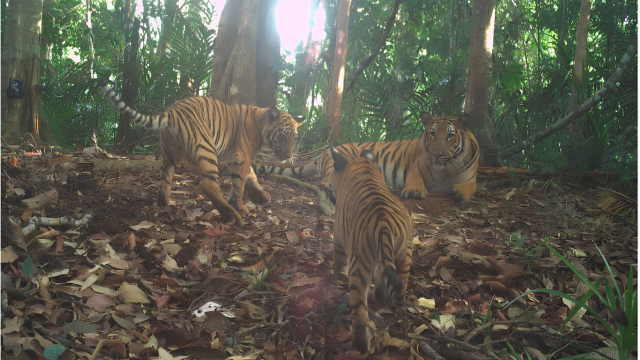
Image of a tigress and her two cubs captured on camera traps in 2025. Credit: © WWF-Malaysia
Finding a Way for People and Wildlife to Coexist
As human activities continue to expand into natural landscapes, encounters between people and wildlife have become increasingly common.
Communities living near forests are often the first to experience the challenges of human-wildlife conflict. Conservationists believe that reducing these conflicts is essential—not only to protect wildlife but also to safeguard local livelihoods.
Through close collaboration between local communities, government agencies and conservation organisations, practical solutions can help people and wildlife coexist while supporting the long-term recovery of species such as the Malayan tiger.
Saving Tigers Starts With Their Food
Another important but often overlooked aspect of tiger conservation is ensuring there is enough food for them to survive.
Tigers rely on healthy populations of prey species such as deer and wild boar. When prey numbers decline, forests can no longer sustain tiger populations, making recovery even more difficult.
As a result, conservation programmes are increasingly focused on restoring ecological balance by improving habitats and helping prey populations recover. Although this is a long-term process, experts believe it is one of the most effective ways to support the future of the Malayan tiger.
A Shared Responsibility
Global Tiger Day serves as a reminder that protecting the Malayan tiger is not the responsibility of conservation organisations alone.
Governments, local communities, businesses and the public all have a role to play in safeguarding one of Malaysia's most iconic species. Every effort—from supporting conservation initiatives to raising awareness—helps build a future where tigers and people can thrive together.
With fewer than 150 Malayan tigers remaining in the wild, the time to act is now. Because saving the Malayan tiger is ultimately about protecting the forests, ecosystems and natural heritage that sustain us all.